
.jpg)
In today's era of rapid digital development, the term "3D Model" frequently appears in our sight. From stunning special effects scenes in Hollywood blockbusters to realistic video game worlds, from cool product displays to precise industrial design, 3D models are everywhere and play a crucial role. So, what exactly is a 3D Model?
Simply put, a 3D Model, or three-dimensional model, is a three-dimensional solid model created through computer software or 3D technology. The "D" here stands for the English word "Dimensions". Unlike the common two-dimensional images in our daily lives, which only have length and width, 3D models add a depth dimension, thereby constructing a three-dimensional virtual object that allows us to observe and understand it from multiple angles.
The birth of 3D models can be traced back to 1963, when Ivan Sutherland developed the Sketchpad Computer-Aided Design (CAD) program, laying the foundation for the creation and editing of 3D models on computers. Subsequently, the introduction of Graphics Processing Units (GPUs) in the 1970s greatly improved the rendering speed and quality of 3D model production. In the late 1980s, the proposal of the additive manufacturing concept further expanded the application scope of 3D models. Today, 3D models have become an indispensable key technology in numerous industries.
There are many professional software options available for creating 3D models, such as 3ds Max, Maya, AutoCAD, etc. These software tools are powerful, enabling designers to create a wide variety of 3D models. Taking 3ds Max as an example, it is widely used in architectural design, game development and other fields. Designers can use polygon modeling tools in the software to gradually construct complex architectural structures or game character shapes by creating and editing vertices, edges and faces. Combined with the addition of materials and textures, the models are given realistic appearance effects. Maya excels in film and television animation production, capable of creating detailed character animations and stunning special effects scenes. By building the model's skeletal system and setting animation keyframes, static models can be brought to life to interpret wonderful stories.
3D models are highly favored in many fields due to their numerous advantages. They can transform abstract concepts into intuitive three-dimensional forms, allowing people to better understand and evaluate design schemes, thus effectively improving work efficiency. In the product design stage, designers can quickly display the appearance, structure and functions of products through 3D models, identify problems in a timely manner and make modifications, avoiding cost waste caused by discovering problems after physical production. At the same time, 3D models can also bring immersive experiences to users, playing a key role in virtual reality (VR) and augmented reality (AR) fields. For example, in VR games, players can interact with virtual environments constructed by 3D models in an immersive way, experiencing unprecedented gaming fun.
With the continuous advancement of technology, the application fields of 3D models are still expanding. From human organ models assisting surgical planning in the medical field to the digital restoration of ancient buildings in cultural heritage protection, 3D models are changing our lifestyle and work methods with their unique charm. Next, let's delve into the wonderful applications of 3D models in various fields.
In the film, television and game industries, 3D models are undoubtedly the magic wand for creating fantasy worlds. Taking the movie "Avatar" as an example, its director James Cameron used 3D modeling technology to create exotic creatures and magnificent natural landscapes on the planet Pandora. The images of the Na'vi people are vivid through detailed 3D modeling. These realistic models are perfectly integrated with live-action shooting, making the audience feel as if they are in this distant and mysterious world, opening a new era of visual effects. In the game "Genshin Impact", 3D models also play a key role. The character models in the game, from facial expressions to texture details of costumes, are meticulously crafted, making each character distinctive. The scenes in the game, such as the European-style architecture of Mondstadt and the oriental charm of Liyue Harbor, have constructed a colorful and fantasy-filled Teyvat continent through 3D modeling, bringing players an extreme immersive gaming experience.
In the industrial design and manufacturing industry, 3D models are a secret weapon for achieving precise innovation. Taking automobile manufacturing as an example, when designing a car, designers first create a 3D model of the car using 3D modeling software. Through this model, they can observe the car's exterior design from various angles and optimize the body lines and proportions. In the car's R&D stage, 3D models can also be used for virtual crash tests, aerodynamic tests, etc. Based on the test results, the car's structure and shape can be adjusted, greatly improving R&D efficiency and reducing costs. In the field of electronic products, 3D models also play an important role. For example, in mobile phone design, 3D modeling can accurately display the mobile phone's appearance, internal structure and the layout of various components, facilitating designers to optimize the design and helping with component manufacturing and assembly during production.
In the architectural field, 3D models have transformed architectural design from traditional blueprints to virtual reality. In the architectural design stage, architects use 3D modeling software to create 3D models of buildings, which can intuitively display the building's appearance, internal space layout and its relationship with the surrounding environment. Clients can better understand the design scheme through 3D models and put forward modification suggestions. During the construction process, 3D models can also be used for construction simulation to identify potential problems in construction in advance, such as pipeline collisions, thereby optimizing the construction plan, improving construction efficiency and reducing construction risks. For some large-scale construction projects, such as high-speed rail stations and stadiums, 3D models can better facilitate design and construction management.
In the field of education and popular science, 3D models have become a new tool for knowledge visualization. In medical education, anatomy is an important subject, but traditional anatomy teaching is limited by the quantity and preservation conditions of cadaver specimens, making it difficult for students to learn comprehensively and in-depth. With the help of 3D models, students can observe 3D models of various human organs on computers, understand the structure and positional relationship of organs from different angles, and also perform virtual anatomy operations, greatly improving learning effects. In history teaching, 3D modeling can reproduce historical scenes, such as the layout of ancient cities and war scenes, allowing students to feel history more intuitively and enhance the interest of learning.
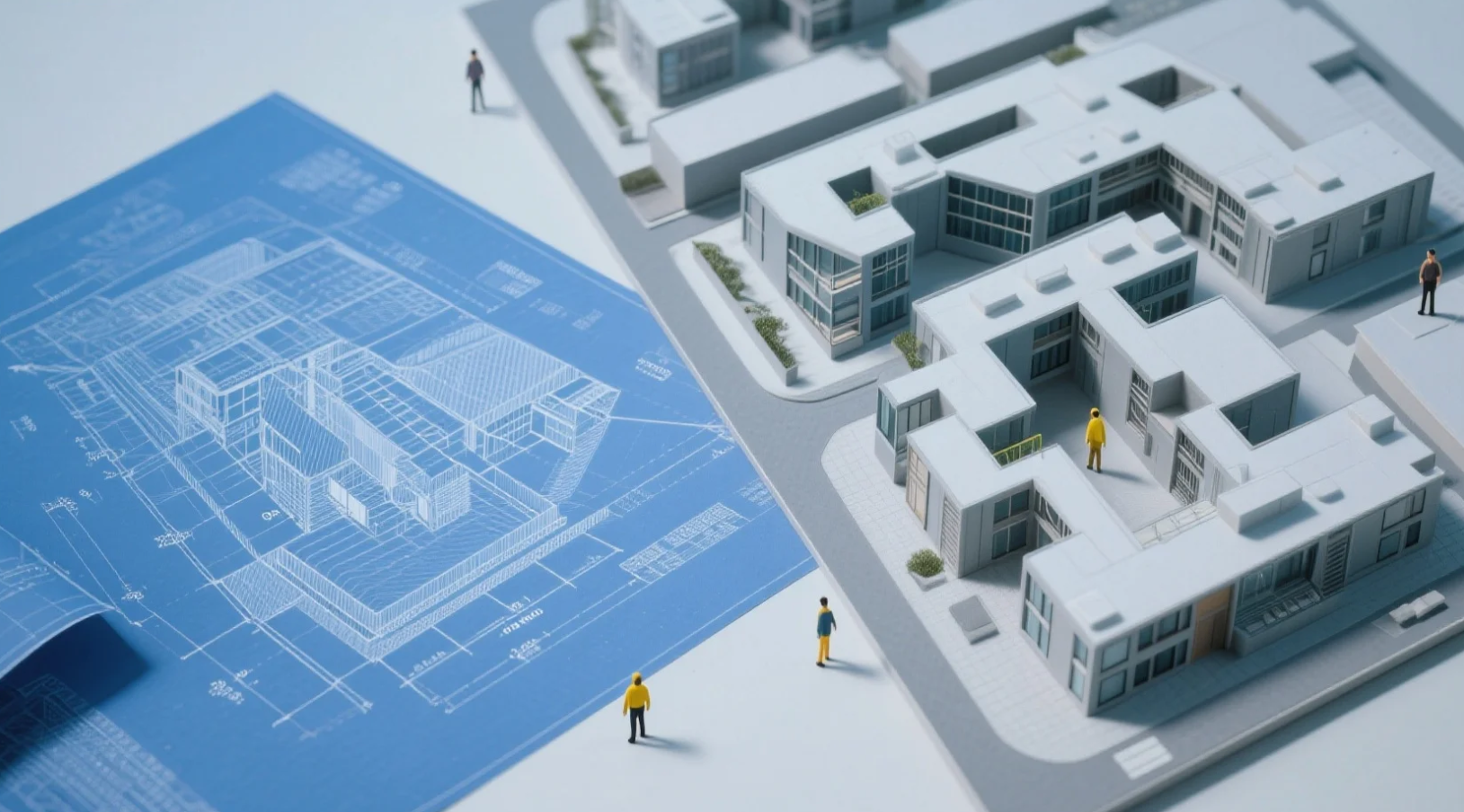
Before creating a 3D model, creative conceptualization is a crucial first step, which is the source of inspiration for the entire creation process. The core of creative conceptualization is to determine the theme, style and purpose of the model. When we receive a task to create a 3D model, we first need to deeply understand the client's needs or the project's goals. If it is to create a character model for a sci-fi game, the theme will naturally revolve around sci-fi elements, the style may be full of sense of technology and futurism, and the purpose is to present unique character images for players to control or interact with in the game. To obtain inspiration, designers often draw nourishment from life, works of art and other excellent 3D models. For example, if you want to create a realistic animal 3D model, designers may go to the zoo to observe the animal's shape, movements and living habits on site, and also refer to some animal-themed paintings, photographs and other successful animal 3D model cases to determine the unique design direction of the model.
The modeling stage is a key step in transforming creative concepts into specific virtual frameworks. Common modeling methods mainly include polygon modeling and surface modeling. Polygon modeling constructs the shape of the model by creating and editing polygons (usually triangles or quadrilaterals). It is characterized by high flexibility and can quickly create various complex shapes, whether it is regular mechanical parts or irregular biological forms. In game development, most character models and scene props are completed using polygon modeling. For example, the hero characters in the game "League of Legends", their complex body structures and costume details are gradually built through polygon modeling. Surface modeling is mainly used to create models with smooth surfaces, which defines the shape of the model based on mathematical curves and surfaces. Surface modeling is widely used in the field of industrial design, such as the design of automobile bodies. The appearance of a car needs to have smooth lines and perfect surface transitions. Surface modeling can accurately achieve this requirement, ensuring the aerodynamic performance and aesthetics of the car.
The addition of materials and textures is a key link to make 3D models vivid. Materials determine the basic properties of the model's surface, such as metal, plastic, wood, etc., while textures add details and realism to the materials, such as wood textures and metal luster. When adding materials to a model, it is necessary to select the appropriate material type according to the actual needs of the model. In 3ds Max software, there are various material types available, such as standard materials and V-Ray materials. If you want to create a metal-textured mechanical part model, choosing V-Ray materials can better simulate the reflection, refraction and luster effects of metal. In texture production, common methods include hand-painted textures, photo textures and procedural textures. Hand-painted textures require designers to have certain painting skills. Through professional painting software such as Photoshop, they manually draw the texture details of the model's surface. This method is often used to create model textures with unique artistic styles. Photo textures are obtained by taking photos of the surface of real objects, which are then processed and applied to the model, enabling quick acquisition of realistic texture effects. For example, to create a brick wall model, you can take photos of real brick walls as textures. Procedural textures are generated using algorithmic procedures built into the software, which are parametrically adjustable and can quickly generate some regular textures, such as checkerboards and noise textures.
Lighting and rendering play a finishing role in 3D model production. They can create realistic light and shadow effects for the model, enhancing the model's three-dimensional sense and realism. There are various types of lighting settings, including point lights, directional lights, spotlights, etc. A point light is like a light bulb in life, with light diverging from a single point to all directions. It is often used to simulate local lighting indoors, such as the effect of a desk lamp illuminating a tabletop. A directional light is similar to sunlight, with parallel light rays. It is suitable for simulating natural light environments outdoors. When creating outdoor scene models, by adjusting the angle and intensity of the directional light, different lighting effects at different times can be simulated, such as morning, noon and evening. A spotlight is like a spotlight on a stage, emitting light in a conical shape and capable of highlighting specific objects or areas. When displaying product models, using spotlights can draw the audience's attention to the key parts of the product. The choice of renderer is also crucial, as different renderers have different characteristics and advantages. Common renderers include V-Ray and Corona Renderer. V-Ray renderer is widely used, with fast rendering speed and the ability to render high-quality images. It supports various materials and lighting effects and has a large number of users in film and television, games, architecture and other fields. Corona Renderer is favored by designers for its realistic rendering effects and easy-to-use interface, especially in the field of architectural visualization, where it can render very realistic light and shadow effects of indoor and outdoor scenes.
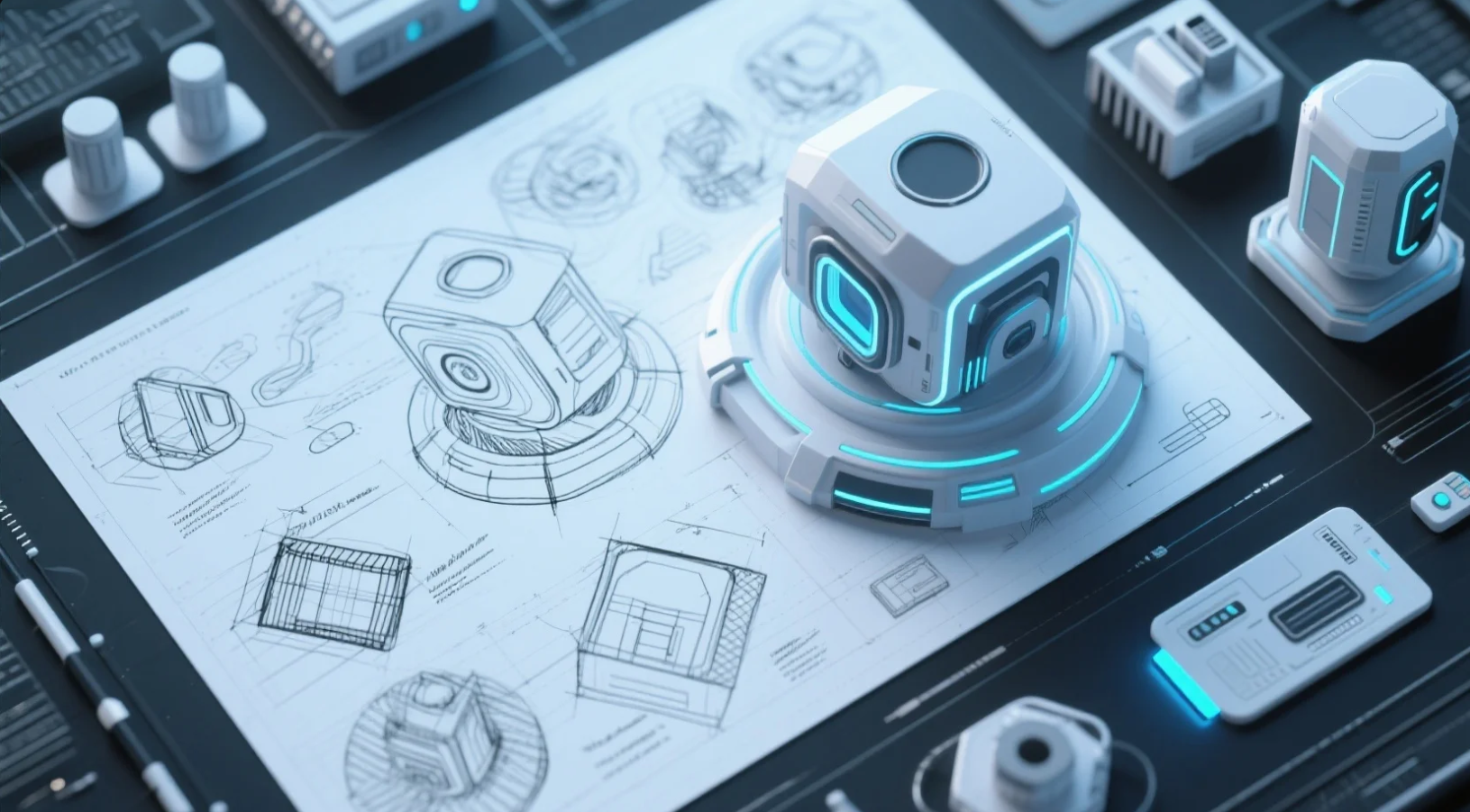
Looking to the future, 3D model technology will continue to innovate. The integration with cutting-edge technologies such as AI and VR/AR will bring us more innovative applications beyond imagination.
In terms of the integration of AI and 3D models, AI's powerful data analysis and processing capabilities will bring a qualitative leap to 3D modeling. In the past, creating a detailed 3D model often required designers to invest a lot of time and energy in manual operations. With the help of AI, this process will become more efficient and intelligent. For example, through AI algorithms, designers only need to input simple text descriptions, such as "a futuristic city with numerous high-rise buildings and flying cars shuttling in the air", and AI can quickly generate the corresponding 3D model framework, greatly shortening the modeling time, lowering the creative threshold, and allowing more people to participate in 3D model creation. At the same time, AI can also analyze a large amount of 3D model data, learn the characteristics and styles of different models, thereby providing designers with creative inspiration and optimization suggestions. In the detailed processing of models, AI can automatically identify and fill model loopholes, optimize the model's topology structure, and improve the model's quality and stability.
The combination of VR/AR and 3D models will also open a new era of experience. In the field of education, students can use VR devices to enter historical scenes constructed by 3D models, "communicate face-to-face" with historical figures, and personally experience the changes of history. In the medical field, doctors can use AR technology to overlay patients' 3D organ models on the real scene, conduct more precise surgical planning and simulation operations, and improve the success rate of surgeries. In the industrial field, engineers can use VR/AR technology to conduct product design, assembly and testing on 3D models in a virtual environment, identify and solve problems in advance, and reduce costs and risks in actual production. In the future, with the continuous maturity of technology, the integration of 3D models with VR/AR will become closer, and the application scenarios will be more extensive, bringing more convenience and surprises to our lives and work.
3D model technology is developing rapidly. It has penetrated into every corner of our lives and will continue to play a huge role in the future. Whether in film and television, games, industry, architecture, education, medical care and other fields, 3D models have shown unique charm and value. It is believed that in the near future, with continuous technological innovation and breakthroughs, 3D models will create a more colorful and infinitely possible digital world for us.
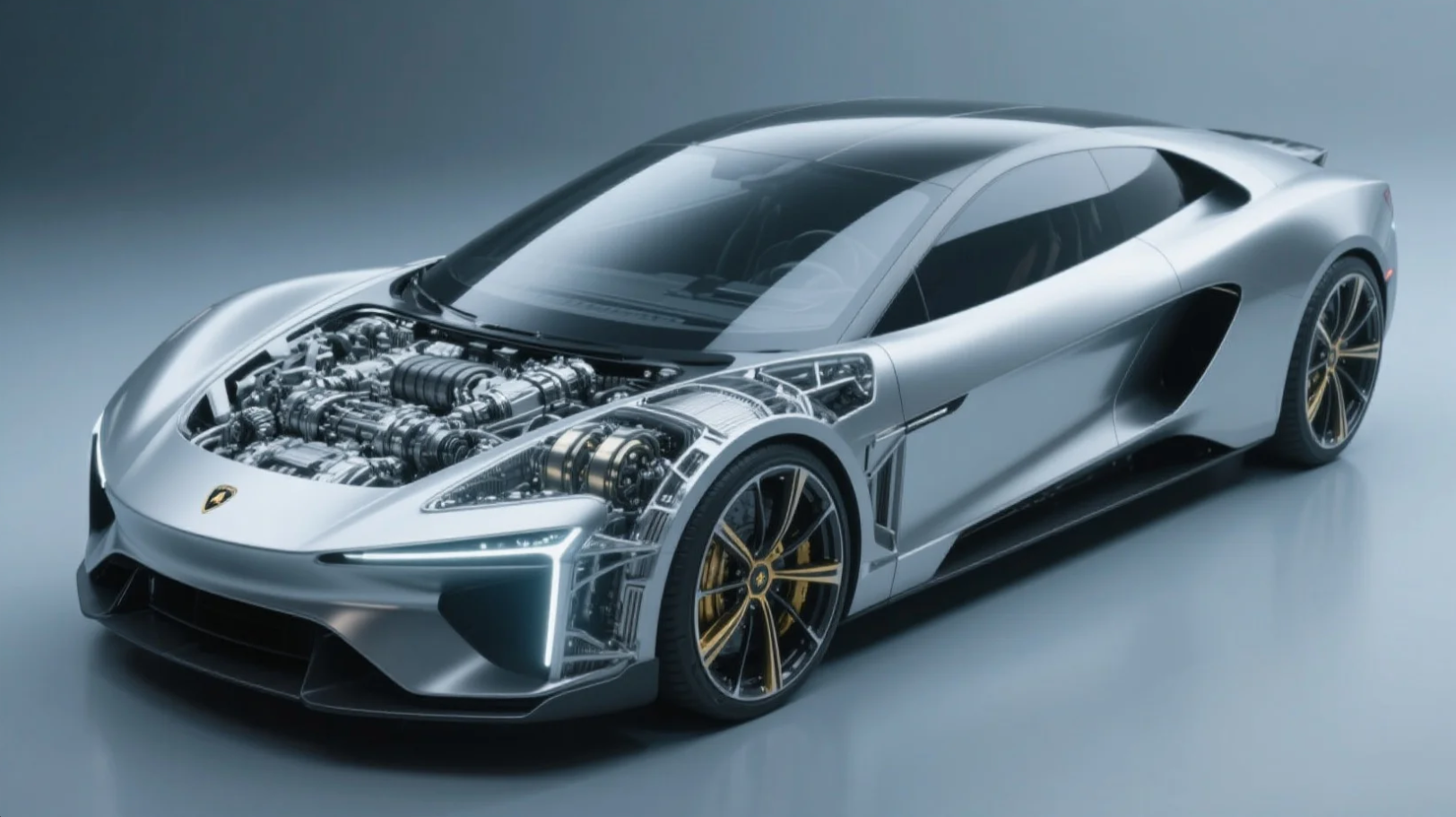
As a key technology in the digital age, 3D models are profoundly changing our lifestyle and work methods with their unique charm and unlimited potential. From stunning virtual worlds in film, television and games to precise innovation in industrial design and architectural fields, and then to the knowledge visualization revolution in education and popular science, 3D models are everywhere and play an indispensable role.
It is not only a technology but also a bridge connecting creativity and reality, allowing us to transform the whimsical ideas in our minds into intuitive three-dimensional forms. With the in-depth integration of cutting-edge technologies such as AI and VR/AR with 3D models, the future development prospects are full of unlimited possibilities.
In this era of rapid development, we encourage everyone to actively pay attention to and explore the world of 3D models. Whether you are a professional designer, engineer, or an enthusiast curious about new technologies, you can find your own excitement in the field of 3D models. Let's embrace the new era of 3D models together and witness more miracles it creates for us!
Contact Us
Leave your contact information, and we will arrange a representative to get in touch with you.